

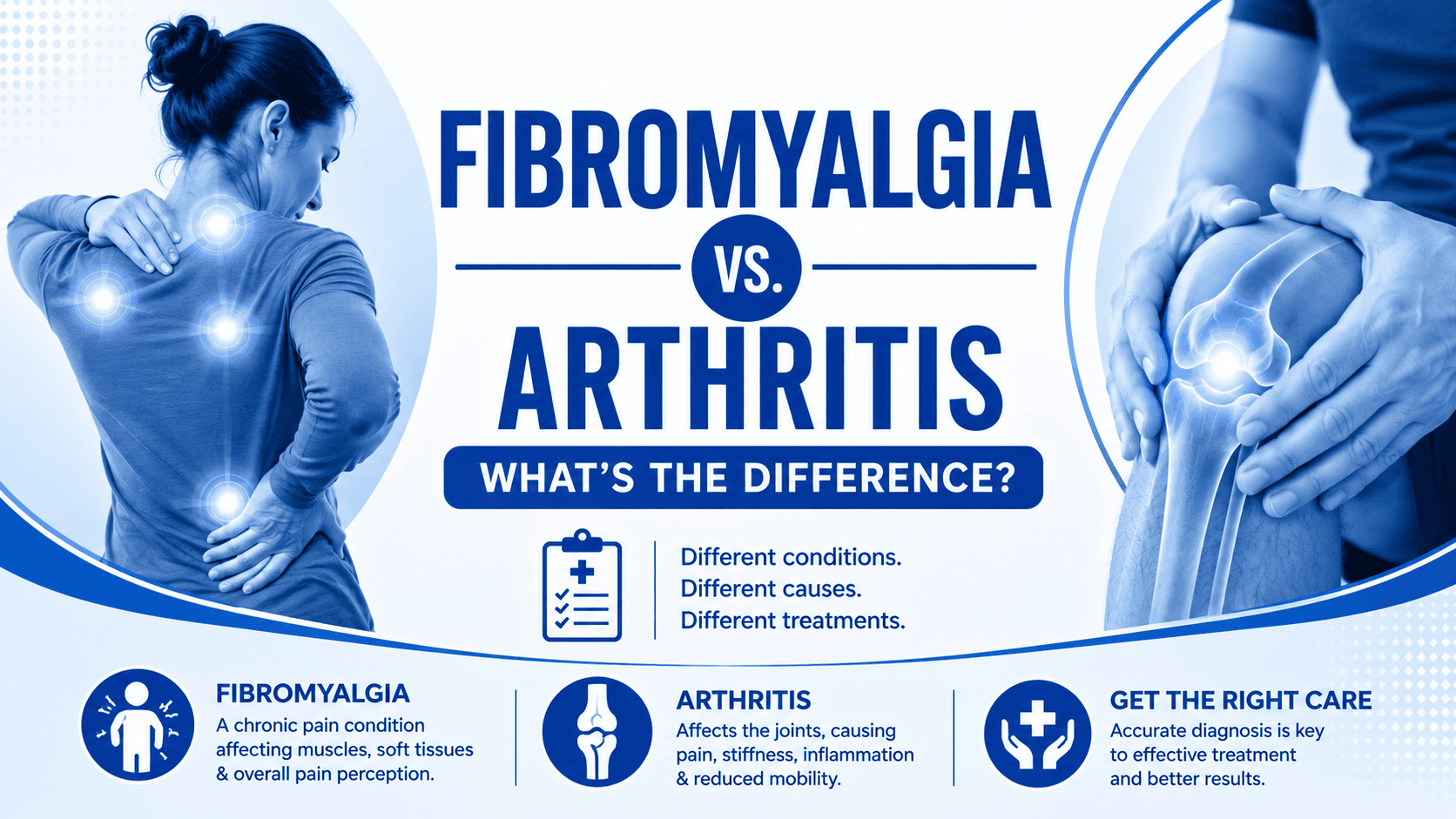
Chronic pain can impact all aspects of daily living, from work to sleep and mobility to mental health. Fibromyalgia and arthritis are two conditions that can be mistaken due to the similarity of symptoms. Both conditions can lead to pain and stiffness and tiredness, but they are quite different in nature with distinct causes, symptoms, and treatments.
It's important to note the difference between fibromyalgia and arthritis in order to receive the appropriate diagnosis and treatment. Let's take a look at these conditions and the symptoms you may experience when deciding which condition is which and what you can do to get better, including treatments like fibromyalgia chiropractic treatment and arthritis treatment that can help improve your quality of life.
What is fibromyalgia?
Fibromyalgia is a wretched ailment that results in pain across the entire body. It impacts the mind and neurological system's capability to regulate pain signals, raising sensitivity to pain.
Fibromyalgia can cause a wide range of symptoms, in addition to pain, such as the following:
- Persistent fatigue
- Sleep disturbances
- Brain fog/difficulty focusing
- Headaches
- Muscle tenderness
- Anxiety or depression
Fibromyalgia does not cause inflammation or damage to the joints like arthritis does. The pain is more of a nervous system and soft tissue nature.
What is arthritis?
Arthritis is a disease characterized by joint inflammation, stiffness, and pain. The most prevalent forms of arthritis are “osteoarthritis” and “rheumatoid arthritis," and there are more than 100 types of arthritis.
Symptoms associated with arthritis are:
- Joint pain
- Swelling
- Redness around joints
- A loss in range of motion
- Stiffness of the joints, particularly the morning stiffness
- Joint tenderness at the affected joints
Unlike fibromyalgia, over time, arthritis can result in actual joint damage. May differ based on the type of arthritis and when treatment is initiated.
Key Differences Between Fibromyalgia and Arthritis
While there are some similarities in symptoms, there are a number of key differences between fibromyalgia and arthritis.
1. Pain Location
Fibromyalgia is a condition of musculoskeletal pain, which affects the muscles, soft tissues, and tendons all over the body. The pain can spread from one area to another. On the other hand, the pain caused by arthritis is usually in one or more distinct joints like the hands, spine, knees, or hips.
2. Inflammation
Inflammation and swelling of the joints are common problems associated with arthritis. Fibromyalgia is not a disease that causes any kind of visible damage to the joints and no inflammation.
3. Fatigue Levels
Fibromyalgia is characterized by one of the main symptoms being extreme fatigue. Tiredness is one of the many symptoms of arthritis, but it is not as pronounced unless the arthritis is of the inflammatory type, which is the case in rheumatoid arthritis.
4. Joint Damage
Over time, arthritis may cause damage to joints and cartilage, particularly when not treated. Fibromyalgia does not cause any harm to the joints or bones.
5. Diagnostic Testing
Arthritis is easily diagnosed with blood tests, MRIs, X-rays, or physical evidence of inflammation. Fibromyalgia can be more difficult to diagnose, as there is no single test for the condition.
There are no clear answers as to what causes fibromyalgia and arthritis, but there are some theories.
Causes of Fibromyalgia and Arthritis
Causes of Fibromyalgia
A fibromyalgia trigger is yet to be identified, but there is speculation it can be related to any or all of the following:
- Genetics
- Stress or trauma
- Nervous system abnormalities
- Infections
- Sleep disorders
Fibromyalgia may develop gradually or after a physical or emotional event.
Causes of Arthritis
There are a variety of causes of arthritis, depending on the type of arthritis being experienced:
- Osteoarthritis can be a result of gradual "wear and tear" on joints.
Rheumatoid arthritis is a condition where your immune system attacks your healthy joints. - Other factors that can affect the risk of arthritis include injury, obesity, aging, and genetics.
Diagnosing Fibromyalgia and Arthritis
The symptoms of these conditions are quite similar, so it's crucial to get an accurate diagnosis.
Diagnosing Fibromyalgia
Fibromyalgia is usually diagnosed by examining the following:
- Chronic widespread pain (CWP) is widespread pain that occurs for a period of 3 months or longer
- Fatigue and sleep problems
- Tender points are located all over the body
- Medical history and pattern of symptoms
Other tests may be ordered to rule out other possibilities, such as blood tests and imaging.
Diagnosing Arthritis
Healthcare providers might use any of the following to diagnose arthritis:
- Physical examinations
- X-rays or MRI scans
- Blood tests
- Joint fluid analysis
Early diagnosis will help to slow the progression of the disease and to minimize complications.
Fibromyalgia Chiropractic Treatment
Fibromyalgia chiropractic is used by many who are looking for a part of a holistic pain management program. Chiropractic is all about improving spinal alignment, spinal mobility, and the function of the nervous system.
Some benefits that chiropractic treatment might offer for fibromyalgia include:
- Reduced muscle tension
- Improved flexibility
- Better posture
- Blessed to be free from chronic pain!
- Improved sleep quality
- Reduced stress levels
Lifestyle changes, gentle chiropractic care, exercise, and massage can assist in promoting overall wellness for those suffering from fibromyalgia.
Because of how sensitive pain is, chiropractors tend to take a different approach in fibromyalgia, which are customized and low-force approaches that will keep the patient from feeling discomfort during the treatment.
Arthritis Treatment Options
Arthritis treatment is dependent on the type and severity of the arthritis. The aims are to minimize pain, increase range of motion, and avoid further damage to the joint.
Typical arthritis remedies consist of the following:
Medications
Doctors may prescribe:
- Anti-inflammatory medications
- Pain relievers
- Corticosteroids
- Disease-modifying drugs for rheumatoid arthritis
Physical Therapy
Strengthening exercises around the joints and flexibility exercises may be done to help strengthen the muscles.
Lifestyle Changes
Arthritis symptoms can be lessened through healthy lifestyle choices like maintaining a healthy weight, low-impact exercise, and eating a balanced diet.
Chiropractic Care
Chiropractic treatments can be helpful for some people with arthritis to improve the mobility of their joints and alleviate stiffness.
Surgical Treatment
When conservative treatments are no longer helpful, in severe cases, joint replacement surgery may be the recommended option.
Is it possible to have both conditions?
It can be diagnosed with both fibromyalgia and arthritis. Actually, a lot of individuals that suffer from rheumatoid arthritis or osteoarthritis can develop fibromyalgia too.
Combined, pain and fatigue can be more difficult to manage. Individual treatment plans are often required to treat the symptoms effectively.
When Should You See a Doctor?
If you do have any of these symptoms, you should seek medical attention:
- Occurring pain in joints or muscles for an extended period of time
- Swelling or stiffness
- Fatigue experienced in daily life activities.
- Difficulty sleeping
- Reduced mobility
- When pain persists for more than a couple of weeks.
Early diagnosis and treatment will help optimize long-term outcomes and quality of life.
Conclusion
While fibromyalgia and arthritis may seem similar, they are very different conditions with distinct causes and treatment approaches. Fibromyalgia mainly affects the nervous system and causes widespread pain without joint damage, while arthritis involves inflammation and deterioration of the joints.
Understanding these differences is essential for finding the right treatment and improving daily comfort. Whether you are considering fibromyalgia chiropractic treatment or exploring options for arthritis treatment, professional guidance can help you manage symptoms more effectively.
Active Family Chiropractic provides personalized chiropractic care designed to support pain relief, mobility, and overall wellness for individuals dealing with chronic pain conditions.
Frequently Asked Questions (FAQs)
Is fibromyalgia considered a type of arthritis?
No, fibromyalgia is not a form of arthritis. It is a chronic pain disorder that affects how the nervous system processes pain.
Can arthritis and fibromyalgia cause similar symptoms?
Yes, both conditions can cause pain, stiffness, and fatigue, which is why they are sometimes confused.
Does fibromyalgia cause joint damage?
No, fibromyalgia does not damage joints or bones like arthritis can.
Can chiropractic care help with fibromyalgia?
Fibromyalgia Chiropractic treatment may help reduce muscle tension, improve mobility, and support overall pain management.
What is the most common Arthritis Treatment?
Common Arthritis Treatment options include medication, physical therapy, exercise, lifestyle changes, and in some cases, surgery.