

Anyone who has experienced a burning, stabbing pain that radiates from the lower back down to the foot knows what sciatica is. It's not subtle. It can't be overlooked. It just appears out of nowhere for many; one wrong turn, one long trip, one night on a lousy mattress, and now getting to the kitchen seems like a chore.
Sciatica is one of the most frequently occurring nerve pain conditions in adults and yet also has one of the most misunderstood understandings. It is believed that it is a diagnosis instead of being a symptom. Once you know what is actually the cause of the problem, the way that you treat it is going to change.
The Sciatic Nerve: A Quick Anatomy Lesson
The largest and longest nerve in the human body is the sciatic nerve. This will start in the lower part of the spine between the L4 (12th thoracic vertebra) and the S3 (1st sacral vertebra) and run through the buttock area, down the back of each leg and all the way into the foot.
If the nerve is compressed, irritated, or inflamed anywhere along its course, the pain does not remain in that location. It radiates. This is what sets sciatica apart—the sensation of pain that radiates and travels from the lower back to the toes.
What really causes sciatica?
The pain is always due to a pressure on the sciatic nerve. That pressure can come from a number of reasons, and if you can correctly identify it, it makes the difference between treatment that works and treatment that doesn't.
Herniated or Bulging Disc
This is the most common cause. Each disc between the vertebrae is like a shock absorber. If one bulges or bursts, the contents may press against the nerve roots and directly affect the nerve root. This is often the reason for those younger than 50.
Lumbar Spinal Stenosis
The spinal canal may become narrowed over time with aging (stenosis). The constriction puts pressure on the nerves within, such as the sciatic nerve. It's a common disorder in older adults and typically causes symptoms that get worse when standing or walking.
Piriformis Syndrome
The psoas is a small muscle in the buttock. It is either through or under the sciatic nerve, depending on the anatomy of the individual. If this muscle is tight, inflamed, or spastic, it can compress the nerve directly. This is frequently misdiagnosed since it doesn't show on a normal spinal imaging.
Degenerative Disc Disease
With age, spinal discs become decreased in height and dehydrated. Concurrently, the intervertebral spaces narrow, allowing stress to build up on nerve roots. The degeneration itself is not always painful, but when the nerve is involved, it results in considerable symptoms.
Spondylolisthesis
This is when one vertebra slides forward on another. This displacement reduces the diameter of the nerve's exit, and the nerve becomes compressed.
Pregnancy
As the body changes during pregnancy, the weight distribution and the loosening of the ligaments in the pelvis and the changes in posture can cause the sciatic nerve to be under considerable pressure. It's common in the third trimester.
Sitting for too long and slouching
Long sitting hours, particularly with weak or inadequate support at the lower back of the spine or sitting in positions that can lead to a compression of discs, are also important factors in the aggravation of sciatica. It is a frequently experienced motivation in desk jobs.
What are the symptoms of sciatica?
The symptoms are fairly characteristic once you know what to look for:
- Lower back or buttock pain with a shooting sensation down the affected leg.
- Burning or tingling down the nerve route.
- Paresthesias or paresis of the affected leg or foot.
- Worsening pain with sitting, standing, or specific movements.
- In more severe cases, someone might not be able to control their foot (foot drop).
One important thing to note: Sciatica almost always occurs on one side of the body and not the other.
When do most people get things wrong?
Rest and pain medication are the initial approaches to sciatica. Both do not fix the problem of compression. While resting, the area will stop further irritation in the short term; prolonged rest will weaken the supporting muscles, and thus the mechanical issue will continue. The symptom signal is managed with pain medications without attempting to address the nerve compression that is responsible for the symptoms.
This is why many people keep finding themselves in this frustrating cycle: better for a couple of days, then back to the pain and just as bad.
Benefits of chiropractic care
A chiropractic care treatment for sciatica is mechanical. The objective is to find the source of the nerve compression in the structures of the foot and ankle and correct it, rather than suppress the symptom.
Spinal Adjustment
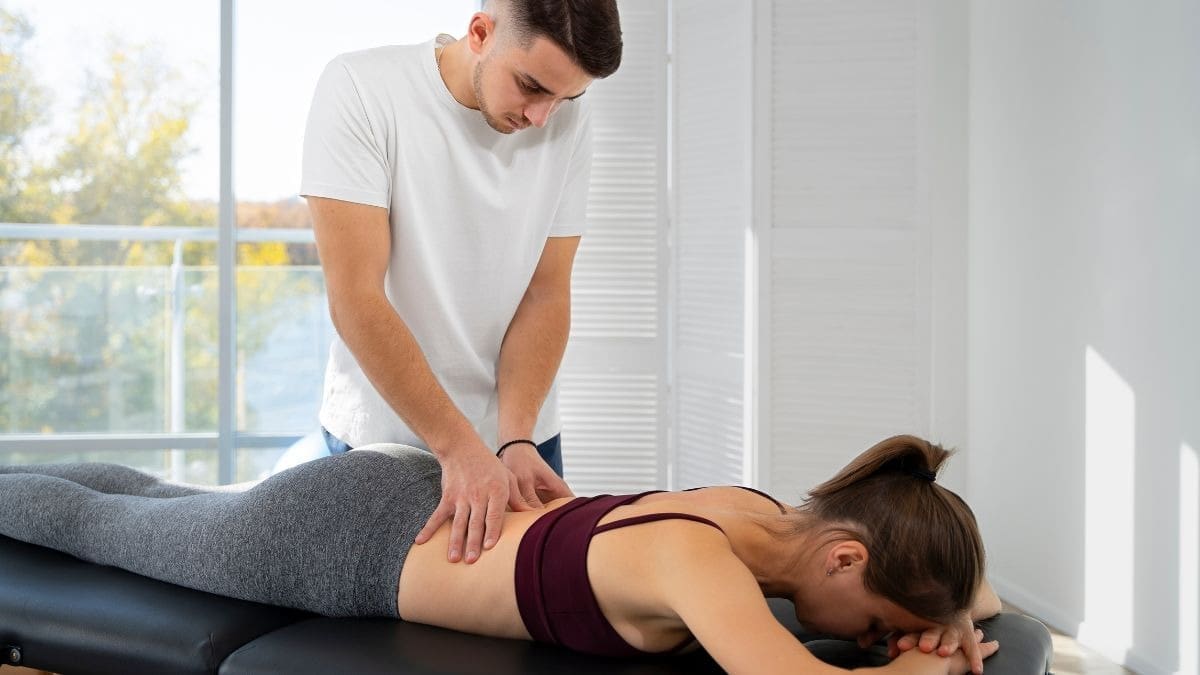
The core intervention. The chiropractors use manual methods to realign and restore the proper spacing between the vertebrae. If the source of the compression is a herniated disc or misaligned vertebra, the targeted adjustments actually lessen that compression directly, and many patients feel relief relatively soon after the beginning of treatment.
Flexion-Distraction Technique
A unique chiropractic technique that is especially beneficial for sciatica resulting from a disc. The patient is positioned on a segmented table that gently stretches and flexes the spine. This helps to pull back bulging disc material away from the nerve due to negative pressure created inside the disc.
Soft Tissue Therapy
If piriformis syndrome is present, direct massage, trigger point techniques, or instrument-assisted massage techniques are used to release the compression without making any changes to the spine.
Corrective Exercise Protocols
Your chiropractor is not a typical practitioner who simply makes adjustments and lets you go home. They detect the postural patterns, movement patterns, and muscular imbalances that may be responsible for your condition, then develop a corrective plan based on these patterns. Core strengthening, hip mobility, and pelvic tilt are common components.
Principles of posture and ergonomics
Long periods of sitting and poor posture are a major cause, and practical tips on how to set up your workstation, sleeping positions, and movement patterns are part of a comprehensive treatment plan.
The research is overwhelmingly favorable for chiropractic care when compared to passive management in the treatment of ongoing sciatica pain, with improved long-term results. It treats mechanical causes, decreases recurrence, and does not expose one to dependency issues associated with long use of pain medication.
Sciatica Pain Management Tips Worth Knowing
Beyond formal treatment, a few consistent habits make a real difference in day-to-day symptoms: avoid sitting for more than 45-minute stretches without movement, use lumbar support when seated, sleep with a pillow between your knees if you're a side sleeper, and prioritize gentle walking over complete rest during a flare-up.
Conclusion
Sciatica isn't something that you can simply endure. The pain is real, and the cause is nearly always mechanical, and mechanical issues have mechanical answers.
If the pain in and around this nerve area is recurring, Active Family Chiropractic can perform specific evaluations to determine exactly where your nerve is being compressed and then create a treatment plan that is unique to your sciatica. They are interested in solving the issue in a structural way, rather than just alleviating symptoms over time. The first step to getting better is to have a proper evaluation.
Frequently Asked Questions (FAQs)
How long does sciatica typically last without treatment?
While mild cases may improve in a few weeks on their own, moderate to severe sciatica will continue or get worse until the compression is addressed. However, the risk of it being a chronic condition exists if you have to wait.
Do Chiropractic Adjustments Hurt Sciatica Patients?
The adjustment isn't painful, and most patients feel just a bit of pressure or discomfort during it. A few experience temporary soreness afterwards, similar to that of muscle fatigue after exercise. This usually clears up in 24 hours.
How many chiropractic visits does it take to cure sciatica?
This depends on the cause and extent of the burn. Patients often improve markedly during the first 6 to 10 sessions. If the condition is chronic or severe, treatment may take a longer period of time, often in conjunction with corrective exercises.
Does sciatica return after chiropractic care?
It can, especially if the underlying posture habits and the movement patterns are not looked at. That is why corrective exercise and ergonomic instruction are an essential component of a comprehensive treatment plan, as they help to prevent reoccurrence greatly.
When is sciatica a medical emergency?
If you have a loss of bladder or bowel control and it is accompanied by sciatic symptoms, then you should seek immediate medical attention. This could mean that it is a serious condition called cauda equina syndrome, and that it needs to be treated immediately.